

OUR TECHNOLOGY
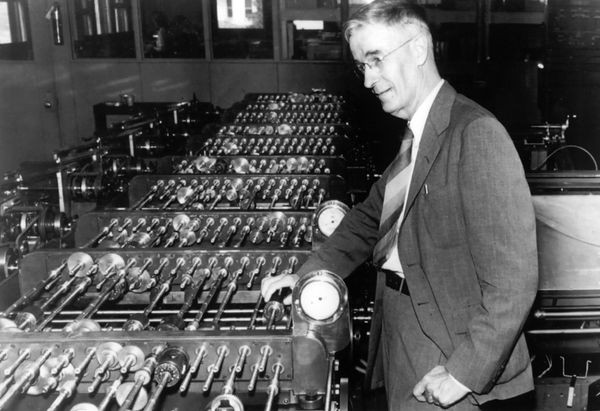
The physical world is a master of computation. For centuries, engineers have leveraged fundamental physical laws such as KVL, KCL, Ohm's law, and the principle of minimum energy to solve complex problems in the native language of the physical world.
At Vellex, we are modernizing this foundational approach. We use physics-based principles and advanced analog electronics to compute solutions directly in hardware. This is not a new idea; it's a fundamental principle of the universe, and we are unlocking its full potential for today's most demanding applications.


From Code to Circuits
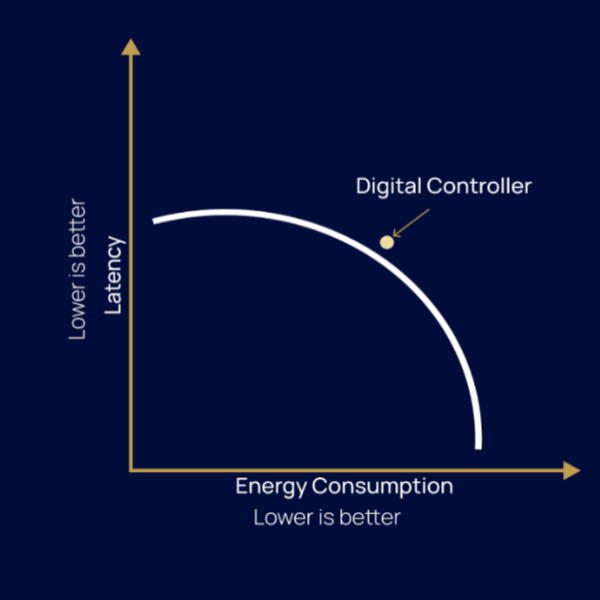
As shown in the figure below, the Vellex Analog Intelligence Platform is a complete solution, combining our proprietary software stack with patented hardware prototypes. This is not an incremental improvement on current technology; it's a fundamental architectural shift. By solving complex optimization and control problems in microseconds, our platform delivers a 100x increase in compute performance per dollar. This allows critical machines to become hyper-resilient, autonomous, and more efficient.


Application Layer
Core Algorithm Layer
Libraries, algorithms, and frameworks that the applications layer relies on
HW/SW Interface Layer
Synthesis and implementation engine
Hardware Layer
Compute device
At the heart of our platform is an innovative software stack designed to bridge the gap between your applications and our analog hardware. It provides a seamless workflow that unlocks the full potential of analog computation.
Vellex-built Libraries & Frameworks
Powerful Synthesis & Implementation
Automated Process removes complexity
Our Journey to deliver Analog Intelligence begins with our Hardware prototypes
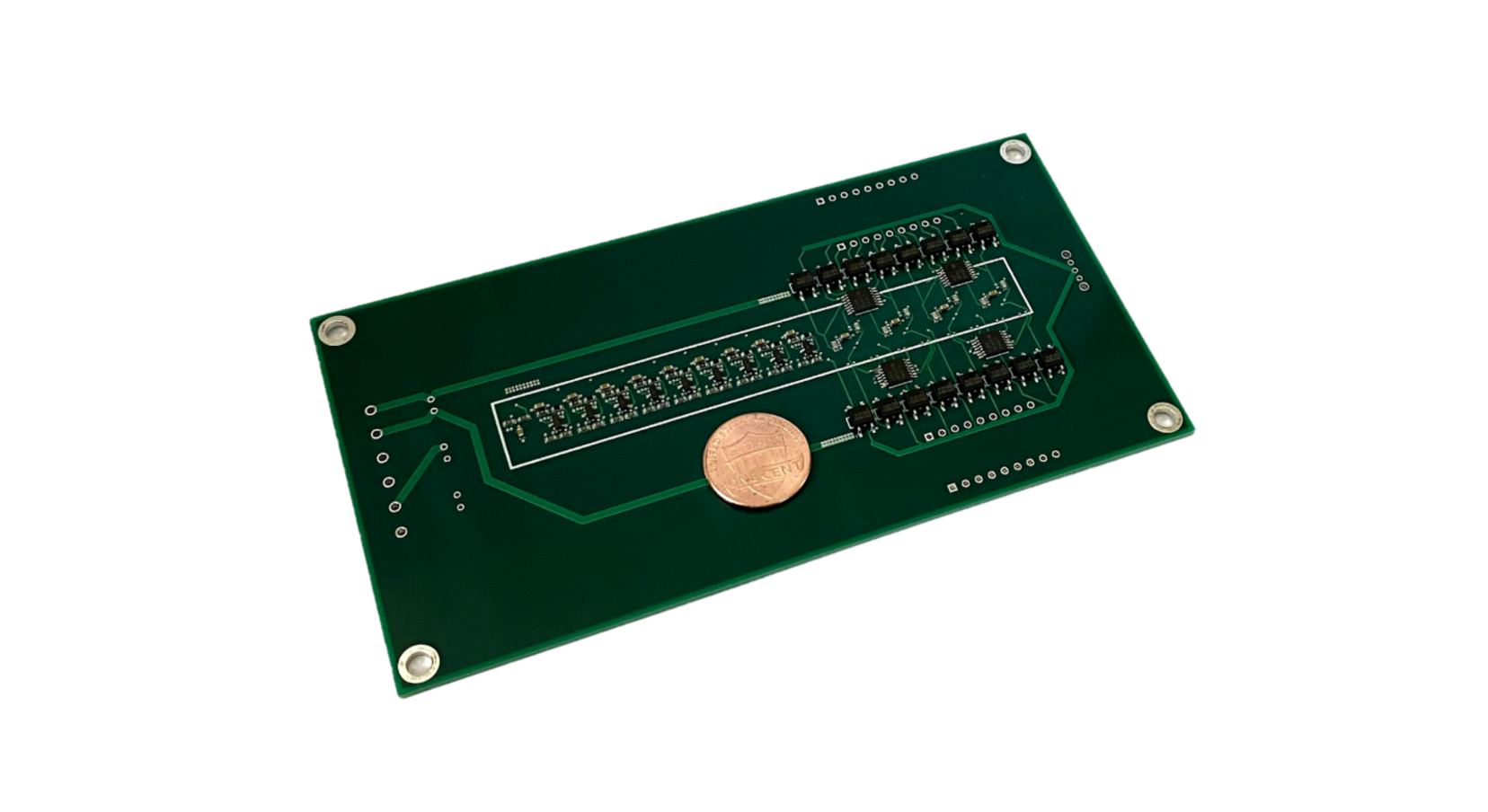

Our technology has been rigorously validated at leading research institutions, including Stanford and Berkeley Lab. With three patents filed to date, we are redefining what’s possible in computing. The following use cases are just a glimpse of our platform's real-world potential.
Use Case 1: Power Efficiency for Data Centers
Use Case 2: Unprecedented speed in Power System Simulation
Ready to see What Vellex can do for you?
Book a meeting
.svg)
The future of computing isn't monolithic. While Quantum handles the intractable and Neuromorphic mimics the brain, Vellex is built to optimize the real world. Here is how we fit into the post-Moore landscape.

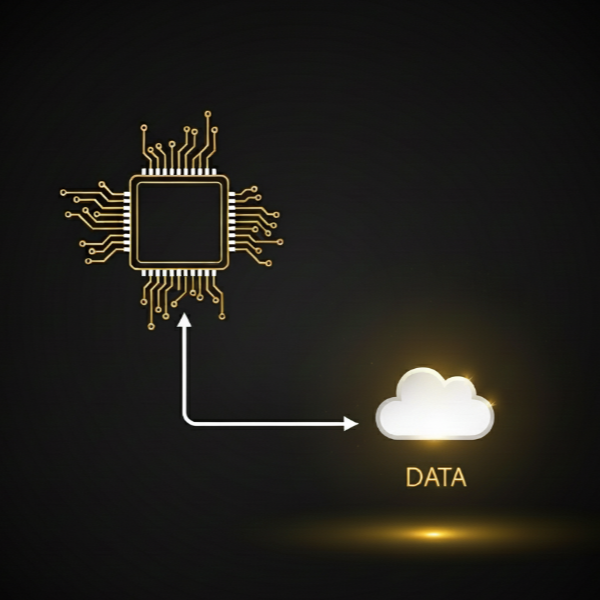
By transmitting only compact, high-value insights instead of raw streams, we slash bandwidth requirements by up to 95%. This unlocks sophisticated real-time control for robotics and sensor networks operating on low-power connections (like LoRaWAN or NB-IoT), where transmitting raw data would be impossible.
By transmitting only compact, high-value insights instead of raw streams, we slash bandwidth requirements by up to 95%. This unlocks sophisticated real-time control for robotics and sensor networks operating on low-power connections (like LoRaWAN or NB-IoT), where transmitting raw data would be impossible.
.svg)
.svg)
.svg)
.svg)
Neuromorphic computing mimics the brain’s architecture for energy-efficient information processing.
Quantum computing leverages quantum mechanics to solve problems impossible for classical systems.
Neuromorphic computing mimics the brain’s architecture for energy-efficient information processing.
Neuromorphic computing mimics the brain’s architecture for energy-efficient information processing.
How it Works: Uses digital or mixed-signal circuits to run event-based systems like Spiking Neural Networks (SNNs), processing data as discrete "spikes."
How it Works: Uses qubits that exist in multiple states (superposition) and interact through entanglement, exploring vast possibilities simultaneously.
How it Works: Uses digital or mixed-signal circuits to run event-based systems like Spiking Neural Networks (SNNs), processing data as discrete "spikes."
How it Works: Uses digital or mixed-signal circuits to run event-based systems like Spiking Neural Networks (SNNs), processing data as discrete "spikes."
Best Suited For: Low-power AI tasks with continuous, asynchronous data, such as pattern recognition, video object detection, and audio keyword spotting.
Best Suited For: Extremely large, abstract problems like molecular simulation, cryptography, and large-scale financial optimization.
Best Suited For: Low-power AI tasks with continuous, asynchronous data, such as pattern recognition, video object detection, and audio keyword spotting.
Best Suited For: Low-power AI tasks with continuous, asynchronous data, such as pattern recognition, video object detection, and audio keyword spotting.
Where it Differs: Excels at AI inference but is less suited for precise mathematical optimization and complex signal processing before AI sees the data.
Where it Differs: A long-term technology requiring extreme conditions, it’s not suited for real-time or edge computing but targets rare, complex computational challenges.
Where it Differs: Excels at AI inference but is less suited for precise mathematical optimization and complex signal processing before AI sees the data.
Where it Differs: Excels at AI inference but is less suited for precise mathematical optimization and complex signal processing before AI sees the data.

