AI Training on Milliwatts

What if your edge devices could learn on their own? Today, they can't. AI models ship static and stay that way, falling behind as real-world conditions shift. Updating them means cloud retraining that costs thousands and takes days. Vellex changes that: personalized, continuous AI training directly on-device, at milliwatt power.

Key Benefits

image
image
image

Train AI on<10mW

less power than a Bluetooth radio.

image

 17,000x Faster Training

benchmarked at Stanford & Berkeley Lab.

image

Minutes, Not Days

vs. hours/days for cloud retraining.

AI That Learns in the Field

image
  • image

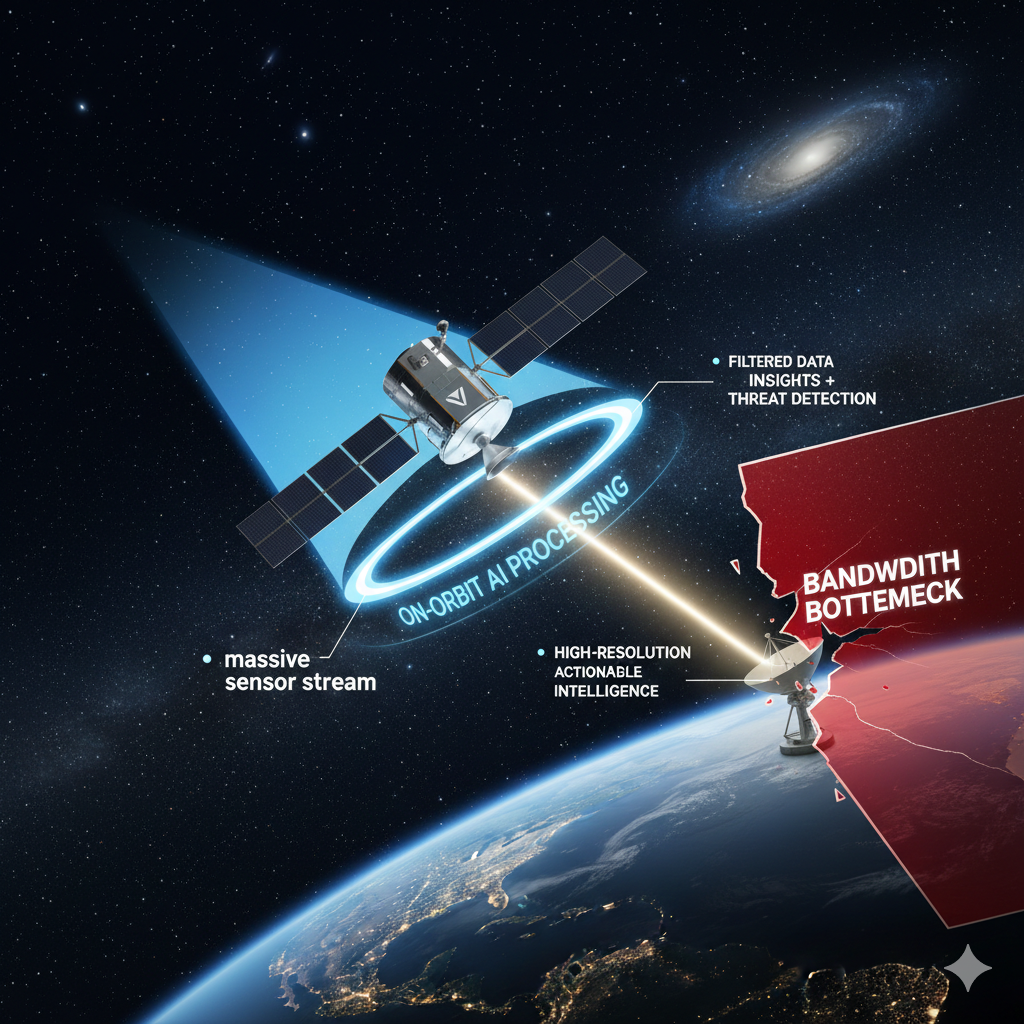
    Satellite & Remote Sensing

    On-orbit training distinguishes valuable scenes from noise with dramatically higher precision, downlinking only what matters.

  • image

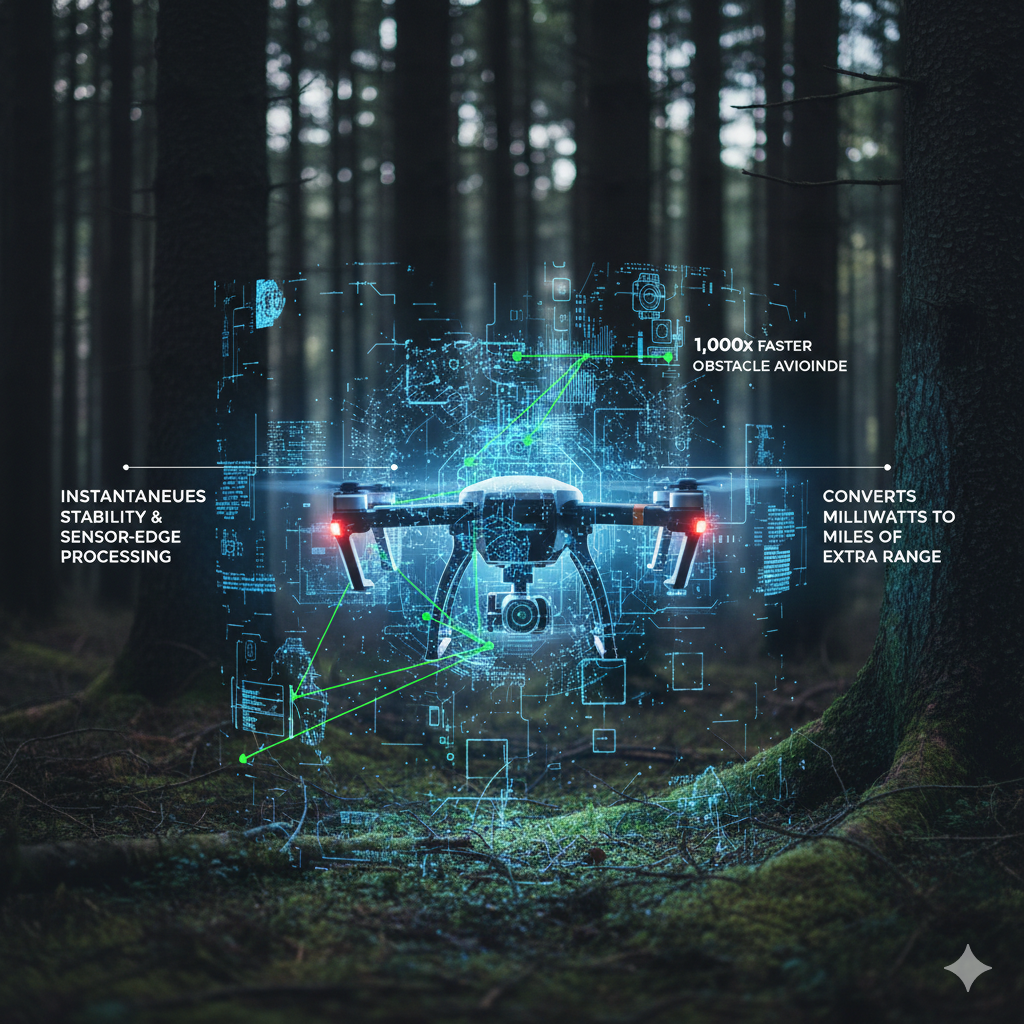
    Drones

    Each mission sharpens the model. Drones gain real-time obstacle avoidance and adaptive search-and-rescue for rapidly changing terrain.

  • image

    Industrial Robotics

    Robots that improve daily, minimizing downtime and mistakes while eliminating defects, false alarms, and quality issues on the factory floor.

  • image

    Wearables & Hearables

    Personalized voice and gesture models that train locally, with no data leaving the device.

  • image

     Entertainment & Gaming

    Private mood-based playlists. In gaming, enemies learn and adapt to the player, making every session unique.

The Problem: AI on Edge devices can't Learn

image

The real world keeps changing. Your models don't.

Today's edge devices ship with static AI models, fixed at the moment of training and unable to adapt as real-world conditions shift.

When performance degrades, the only option is a costly loop: collect data, send it to the cloud, retrain, push an update, and hope conditions haven't changed by the time it arrives. This process takes hours to days, costs thousands per cycle, and is often impossible where bandwidth is limited or data can't leave the device.

The architecture behind this was built for a different era. It's slow, power-hungry, and impossible to scale. The intelligence is always a step behind the world it's supposed to understand.

  • image

    The Energy-Intelligence Gap

    AI training requires watts of GPU power. For battery-operated edge hardware, that makes on-device learning physically impossible.

  • image

    The Bandwidth Bottleneck

    Updating a static model means transmitting raw data to the cloud, creating latency, driving up infrastructure costs, and exposing sensitive data to security risks.


The Solution: Computing with Physics

image

The bottleneck isn't speed. It's the architecture.

Most AI hardware works harder to go faster. Vellex took a different approach. Instead of iterating toward a solution millions of times, our system uses analog physics to settle at the answer naturally, the way a ball finds the bottom of a bowl.


Iterative search: Calculate → Check → Repeat
Millions of steps | Watts of power.


Physics-based optimization: the system settles at the solution naturally.
One step | Milliwatts.

Traditional AI training is a brute-force optimization problem: discretizecalculate → check → repeat, consuming watts of power and hours of time to converge on the right answer. Vellex maps that same optimization onto a physical system that resolves it near-instantly, at a fraction of the energy.
The result is a programmable analog IP block that delivers optimal model weights at milliwatt power and nanosecond-scale speed. It sits alongside standard ARM or RISC-V cores. Engineers work in familiar ML frameworks; our compiler handles the rest. No analog expertise required.

The Market Opportunity

image

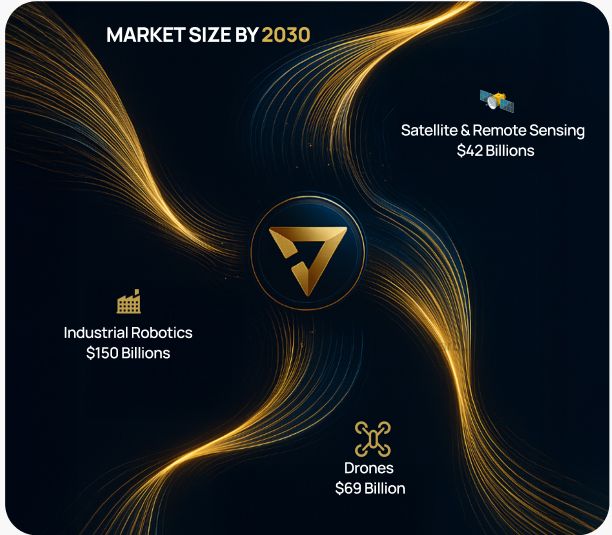
Edge AI hardware:  a $59B market by 2030

The global edge AI hardware market is projected to reach $59 billion by 2030, driven by growth in autonomous systems, smart infrastructure, and real-time sensing. A key barrier to realizing this potential: edge devices can run AI, but most still can't train it. Not on battery power. Not at scale.

Vellex addresses this directly. Our physics-based analog IP makes continuous on-device learning practical for the first time, enabling new capabilities in markets where cloud retraining is too slow, too expensive, or simply not an option: satellite and remote sensing, industrial robotics, drones, and wearable technology.

image

Our Supporters

image

Backed by leading institutions in science, computing, and deep tech.

Latest in the News

image
Vellex Computing Wins Two Awards at InnoVEX 2026

InnoVEX 2026

  • image

    June 9, 2026

  • image

    Vedant Wakchaware

Vellex Computing Wins Two Awards at InnoVEX 2026

Vellex Computing won two awards at InnoVEX 2026, including the Plug and Play Taiwan Award at the InnoVEX Pitch Contest, where it was the sole recipient among 15 finalists from 8 countries.

Vellex Selected as IC Taiwan Grand Challenge Winner & InnoVEX Exhibitor

2026 IC Taiwan Grand Challenge

  • image

    May 9, 2026

  • image

    Vedant Wakchaware

Vellex Selected as IC Taiwan Grand Challenge Winner & InnoVEX Exhibitor

Vellex Computing was named one of 11 winners from 590 proposals across 56 countries in the IC Taiwan Grand Challenge, earning a $30,000 prize and direct access to Taiwan's semiconductor ecosystem.

Vellex Named AI Track Finalist at 2026 Industry Growth Forum

2026 IGF

  • image

    April 7, 2026

  • image

    Vedant Wakchaware

Vellex Named AI Track Finalist at 2026 Industry Growth Forum

Vellex Computing was named an AI track finalist at the 2026 Industry Growth Forum in Denver, selected from 273 applicants to pitch before nearly 200 investors with $1.6 billion of capital to deploy.

FAQs

image